
Interior Design · 2026-09-23
Interior Design for Small Dhaka Apartments
Practical ways to make a compact Dhaka flat feel larger, work harder and stay comfortable in heat and humidity.
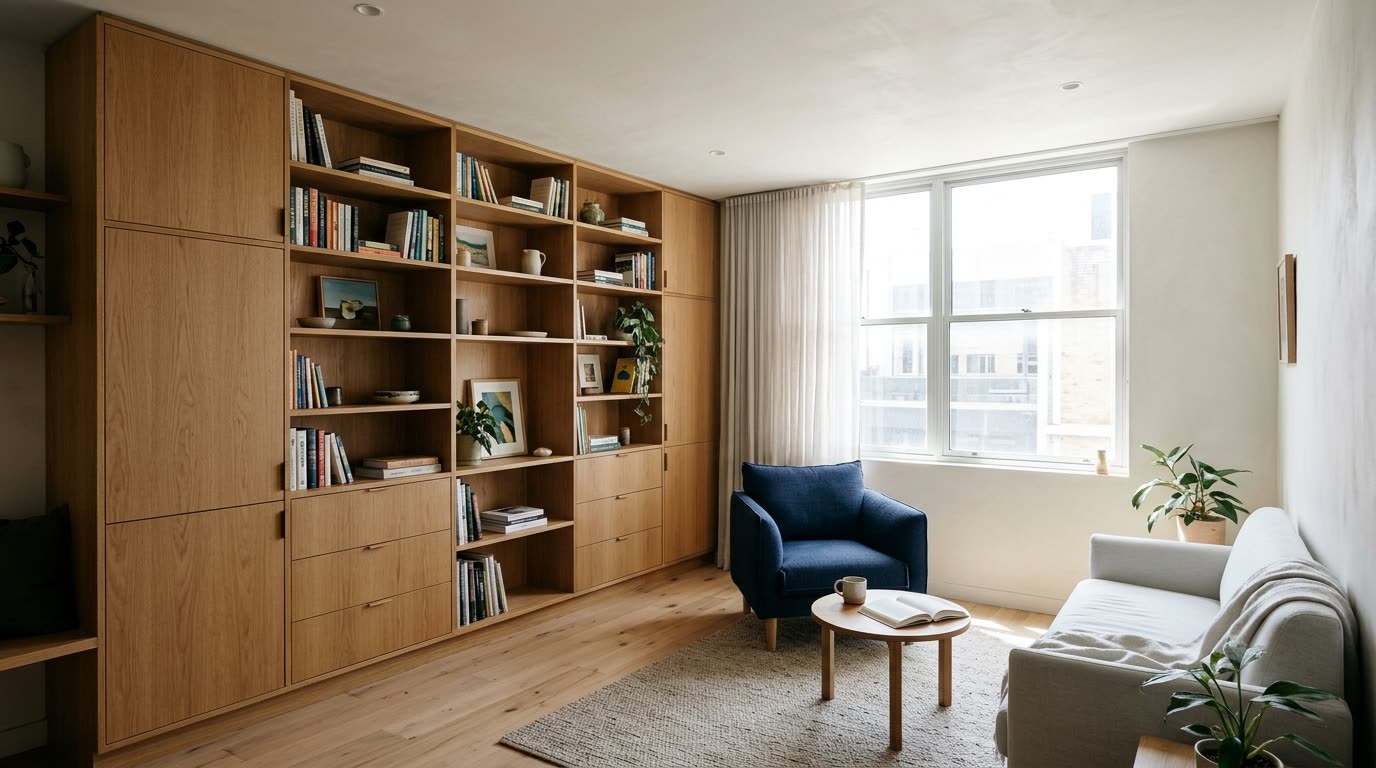
Most apartments in Dhaka are smaller than their occupants would like, poorly cross-ventilated, and bright on one side only. Good interior design responds to those facts rather than decorating around them.
Plan before finishes
The largest gains come from moving or removing partitions, not from selecting a colour. Combining a cramped kitchen with an underused dining area, or borrowing from an oversized corridor, often produces a flat that feels transformed. Before anything structural is touched, establish what is load bearing and what the building's rules permit — in an apartment block that is not only a structural question.
Storage is the real constraint
Clutter makes a small space feel smaller faster than any other factor. Full-height joinery uses the volume a room already has and reads as wall rather than furniture. Build storage into the places that are otherwise wasted: beneath beds, above doors, inside stair voids, along the dead end of a corridor. A fitted wardrobe that runs to the ceiling in a finish matching the wall will disappear; a freestanding one will not.
Light, and the illusion of depth
With daylight usually from one side, the aim is to carry it deeper. Keep the window wall as clear as possible. Use lighter, warmer tones opposite the glazing so it bounces rather than absorbs. A mirror set perpendicular to the window — not facing it — widens the room without the fairground effect.
Avoid relying on a single ceiling fixture. Layered light from a few sources at different heights makes a small room read as larger and far more comfortable at night.
Choose materials for the climate
Humidity decides what survives. Solid or engineered timber with a proper moisture-tolerant finish handles Dhaka better than cheap MDF, which swells at the edges and never recovers. In kitchens and bathrooms, specify boards rated for wet areas and insist on sealed cut edges — that detail, not the board, is usually where failure begins. Leave a ventilation gap behind full-height joinery on external walls so air can move and condensation can dry.
Restraint reads as space
A tight material palette — two or three finishes repeated — makes a small interior feel calm and deliberate. Too many materials chop a space into fragments. The same logic applies to colour: let one accent do the work rather than three competing for attention.
Make it flexible
A guest room used twice a year is expensive floor area. A study that becomes a spare bedroom with a sofa bed, a dining table that works as a desk, a hallway deep enough to hold a bench — in a compact flat, rooms that do two jobs are worth more than rooms that do one perfectly.
Planning an architecture, interior or construction project in Bangladesh?