
Interior Design · 2026-09-02
Office Interior Design in Dhaka: Designing for How People Work
What makes a workplace in Dhaka productive — acoustics, light, air, flexibility — and the costly mistakes fit-outs keep repeating.
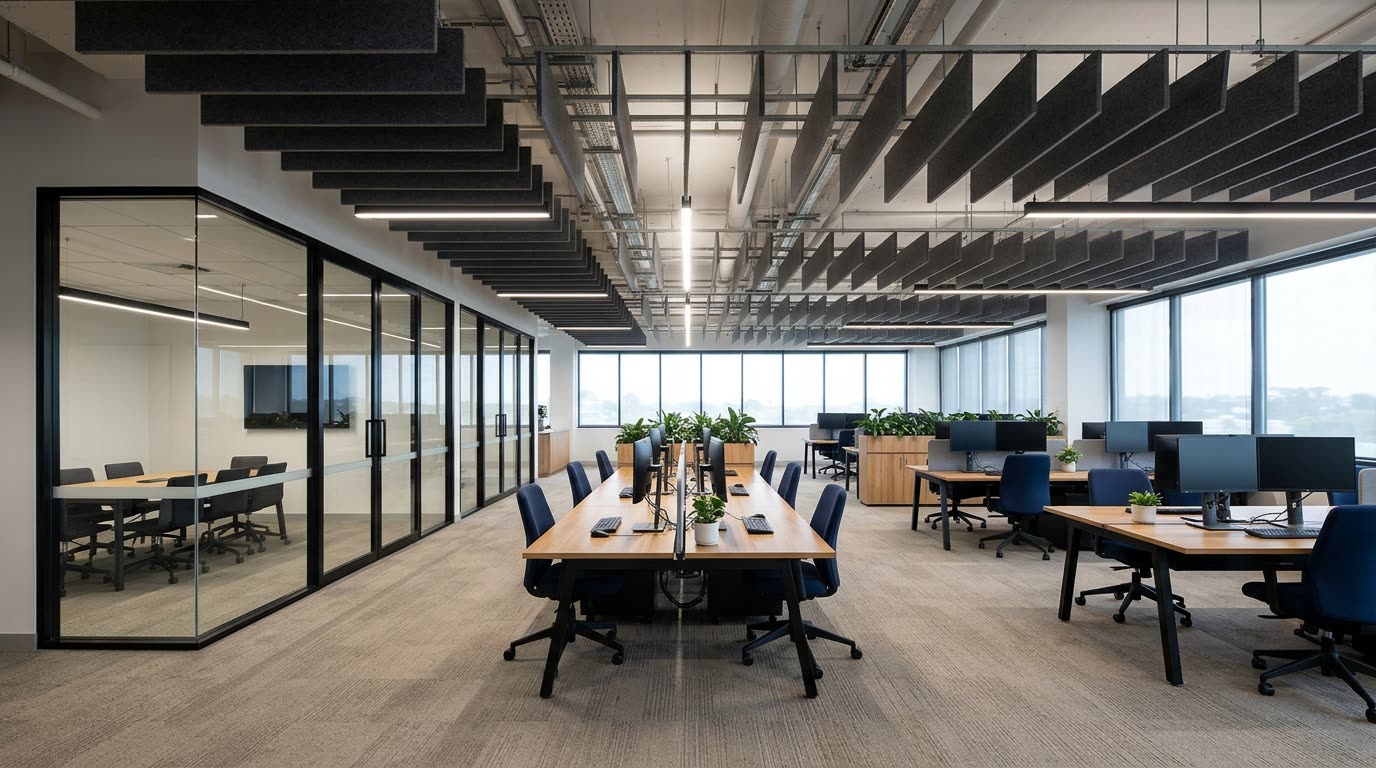
An office fit-out is usually judged on how it photographs and lived with on how it performs. The gap between those two is where most of the budget is wasted.
Start with how the organisation actually works
Desk count is the easy part. The harder questions are how much work is collaborative, how often people need a room with a door, whether teams need to see each other, and how much of the week anyone is actually in the building. An office laid out from an org chart rather than from observed behaviour tends to be simultaneously crowded and empty.
Acoustics are the most common failure
Open plan spread because it is flexible and space-efficient, and it fails when nobody budgets for sound. Hard floors, glass partitions and exposed soffits look sharp and produce an environment where concentration is difficult and every call is audible.
The fixes are known: absorption on the ceiling plane where it does most work, soft flooring in open areas, enclosed rooms for calls, and separation between focused and social zones. These are cheaper designed in than retrofitted after the complaints start.
Light and air determine comfort
Daylight should reach as much of the floorplate as possible, which argues for enclosed rooms in the plan's depth rather than along the glazed facade — a layout many fit-outs reverse. Where glare is a problem, control it at the facade rather than by asking people to close blinds permanently.
Ventilation deserves more attention than it usually gets. In a sealed, air-conditioned Dhaka office, fresh air supply is a design parameter with measurable effects on alertness, not a background detail. It is worth asking what rate the system actually delivers.
Plan for change
Organisations change faster than fit-outs. Raised floors or accessible containment, a logical power and data grid, demountable partitions and furniture that reconfigures all make the next change cheap. Bespoke built-in joinery everywhere makes it expensive.
The things that get cut and shouldn't
Under budget pressure, the first casualties are usually acoustic treatment, proper task lighting and decent chairs — all of which affect people every day — while reception finishes and the boardroom table survive intact. That is the wrong order. Spend on what every employee touches for eight hours before spending on what visitors see for eight minutes.
Planning an architecture, interior or construction project in Bangladesh?