
Interior Design · 2026-08-19
Lighting Design: The Cheapest Way to Transform an Interior
Layering, colour temperature, glare and control — why lighting changes how a room feels more than almost any other decision.
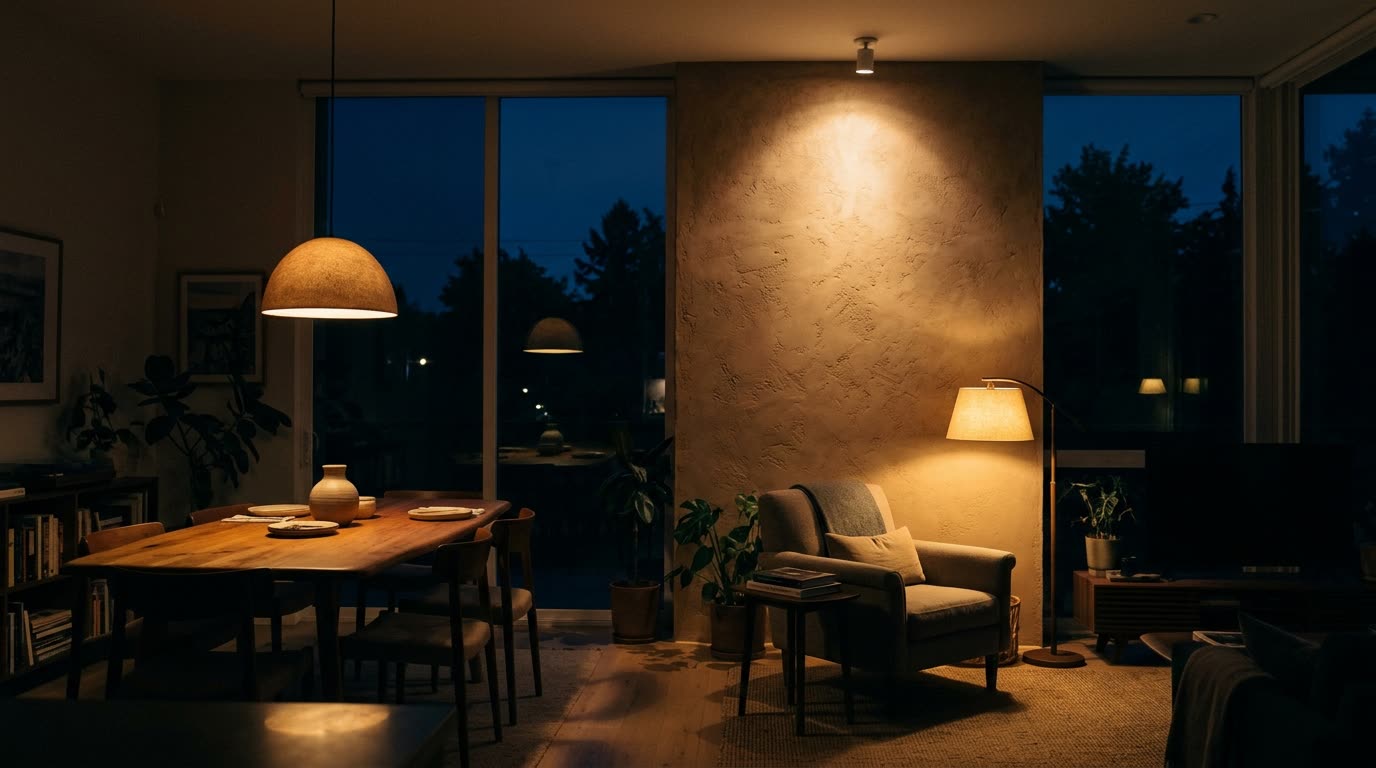
Lighting is a small fraction of a fit-out budget and a large fraction of how a finished space feels. It is also the element most often reduced to a ceiling grid signed off at the last minute.
Layers, not a ceiling grid
A single bright source overhead flattens a room and puts shadows on faces. Good lighting uses several layers, each with a job:
- Ambient — the general level, ideally indirect or bounced.
- Task — concentrated where work happens: the worktop, the desk, the reading chair. Rarely from the ceiling centre.
- Accent — on artwork, texture or planting, giving a room depth and a focal point.
- Decorative — the fitting you see, which is as much object as light source.
A room with three modest layers will feel better than one with a powerful single source, and will usually use less energy.
Colour temperature and the quality of light
Warmer light suits domestic and hospitality settings; cooler light suits focused and clinical tasks. Mixing temperatures carelessly within one room reads as a mistake, because it is one.
Colour rendering matters more than most specifications acknowledge. A light source with poor rendering makes timber look grey, food look unappetising and skin look ill. For any space where materials, food or people are meant to look good, this is worth paying for — and worth asking the supplier about rather than assuming.
Glare is what makes a room uncomfortable
Discomfort in a brightly lit room is usually glare rather than brightness: bare lamps in the field of view, fittings not recessed or baffled, or reflections off glossy surfaces. Deep-set or shielded fittings, indirect light and matt finishes where light lands all help. The fix is cheaper than the complaint.
Control is half the value
A room that cannot be dimmed has one mood. Separate circuits for each layer, dimming on the ambient and decorative layers, and switching that matches how people move through the space turn one installation into several atmospheres. This is almost entirely a first-fix decision — adding it later means chasing walls.
Daylight is part of the scheme
Electric lighting should be designed around the daylight a room already receives, not independently of it. Which parts of the plan stay dark at midday, where glare arrives in the afternoon, and how the room is used after dark all shape the layout. Treating the two as separate problems produces rooms that are over-lit by day and badly lit at night.
Planning an architecture, interior or construction project in Bangladesh?