
Interior Design · 2026-08-26
Global Interior Design Trends Worth Taking Seriously
Which international interior directions have substance behind them — and how they translate to a humid, tropical climate.
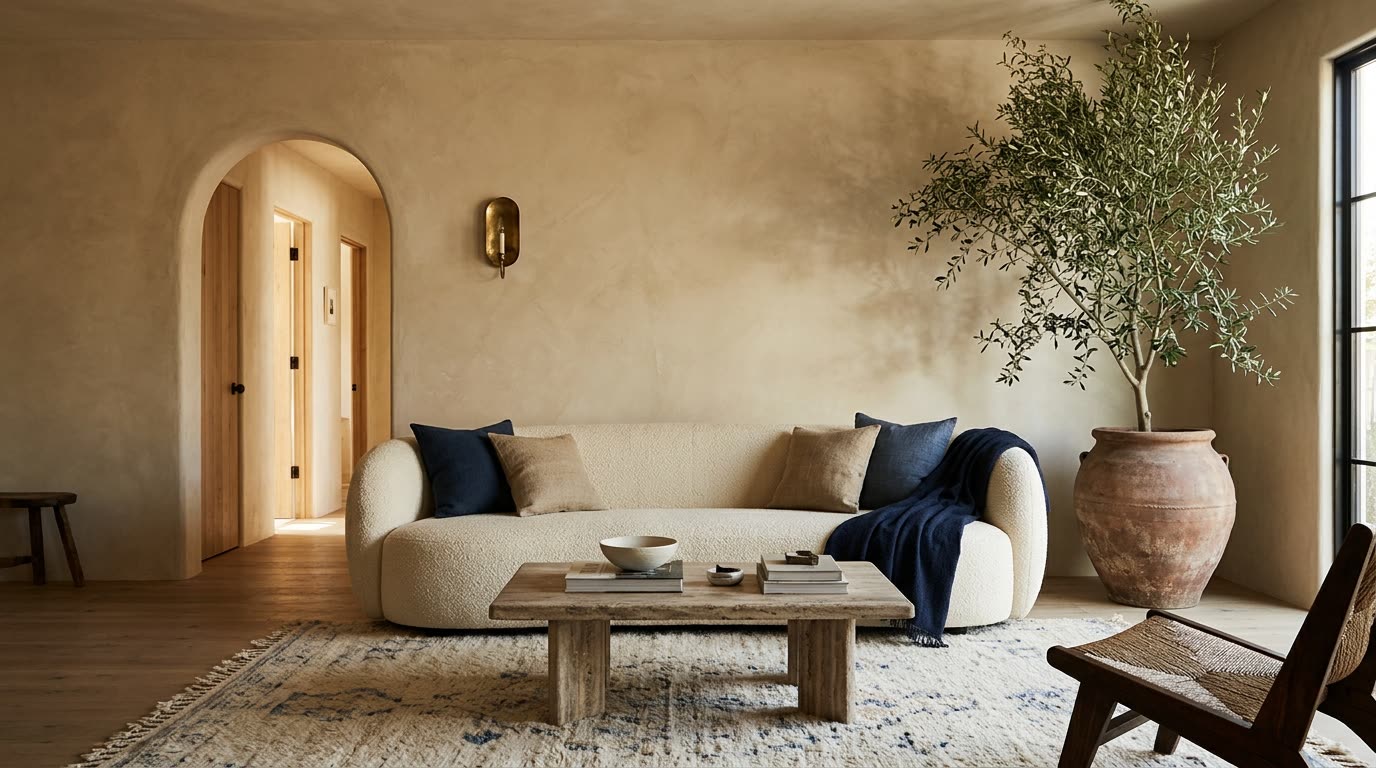
Most trend coverage is a shopping list. The directions below have lasted long enough to suggest they are responding to something real, and each needs adapting before it works in this climate.
Warm minimalism
The cold, white, hard-edged minimalism of the 2010s has given way to something softer: the same restraint and lack of clutter, but in warm neutrals, natural textures and rounded forms. It photographs less dramatically and is considerably easier to live in.
It travels well to Bangladesh, where a limited palette of timber, plaster and stone suits both the light and the available craft. The caution is maintenance — pale, soft finishes show humidity and wear quickly, so specification needs to be robust where hands and water reach.
Biophilic design, properly understood
Biophilic design is frequently reduced to adding plants. The substance is broader: daylight and views out, natural materials, natural ventilation, water, varied spatial experience, and visual complexity resembling natural patterns. The research base on wellbeing and productivity is reasonable.
In a tropical climate this is less an import than a return. Courtyards, verandahs, screens and planted thresholds are long-standing regional responses that happen to satisfy the whole checklist.
Curves and softened geometry
Arched openings, rounded furniture and curved partitions have displaced hard rectilinearity across residential and hospitality work. Done lightly it makes an interior feel generous. Done heavily it dates fast — a fully arched apartment will read as a specific year for the rest of its life. Curves work best as the exception.
Material honesty and patina
There is a sustained move away from materials pretending to be other materials, towards finishes that show how they are made and age visibly: lime plaster, unlacquered brass, solid timber, terrazzo, exposed concrete. The appeal is partly ecological and partly that these surfaces improve rather than degrade.
In humid conditions this needs judgement. Lime plaster breathes and suits the climate; unlacquered brass will patinate much faster than the reference image suggests; untreated timber in a bathroom will not end well.
Circularity and reuse
Reuse is moving from a budget tactic to a design position: retaining existing structure, specifying reclaimed materials, choosing things that can be dismantled rather than demolished. The embodied carbon argument is the strongest environmental case in interiors, where fit-outs are often replaced on a short cycle.
Translating any of it
The question for a project here is never whether a direction is current, but whether it survives contact with heat, humidity, available craft and how the space will actually be used. A reference image shot in a dry temperate country is a starting point for a conversation, not a specification.
Planning an architecture, interior or construction project in Bangladesh?