
Architecture in Bangladesh · 2026-09-16
Exposed Brick and Local Materials in Bangladeshi Architecture
Why brick remains central to building in Bangladesh, how it is used well, and what is changing about how it is made.
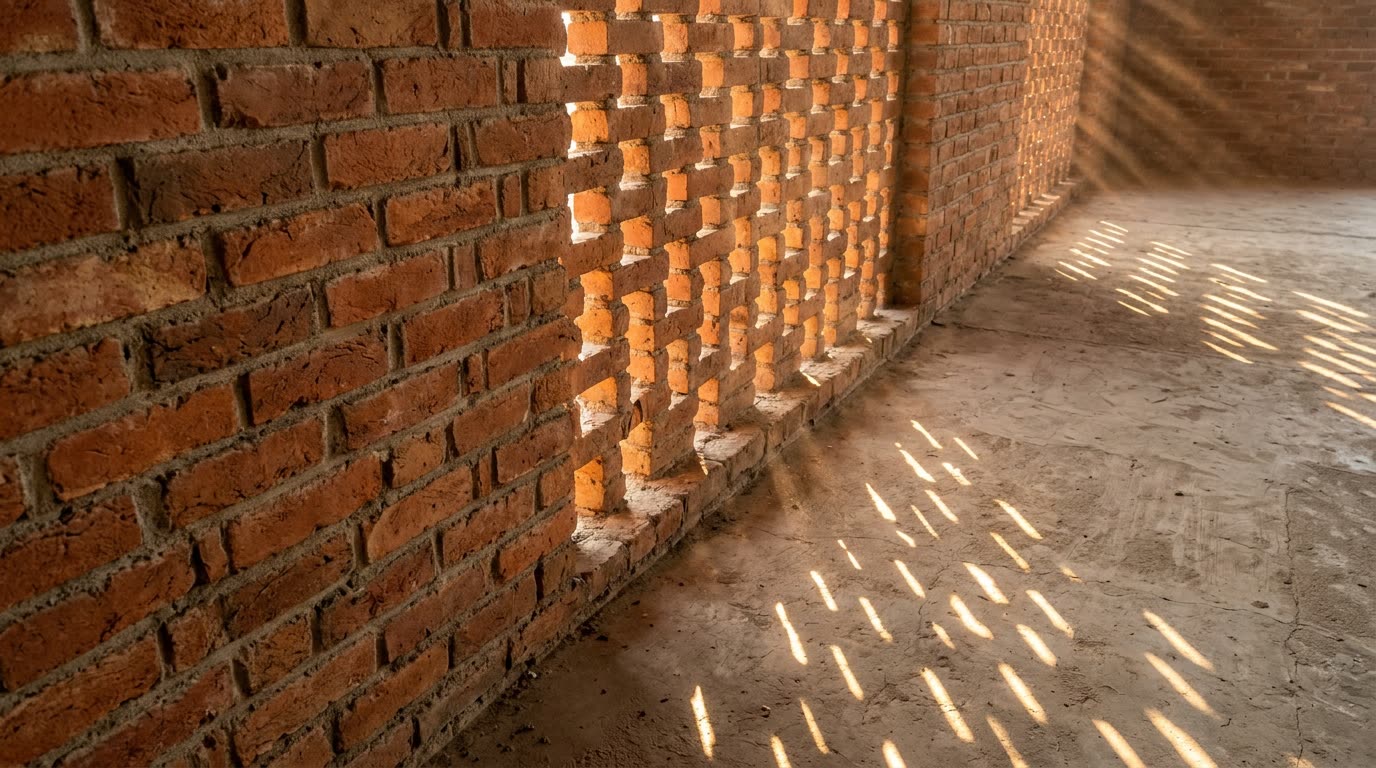
Brick is the default material of Bangladeshi construction for reasons that are geological before they are cultural. A delta with abundant clay and almost no building stone will make its buildings from what the ground provides.
Why brick suits the place
Beyond availability, brick suits the climate. Its thermal mass moderates indoor temperature swings. It weathers without looking neglected, which matters in a climate hard on paint and render. It is repairable in small units by widely available skills. And it is dimensionally forgiving in a construction culture where tolerances vary.
It also carries a design logic. A brick wall is made of a small repeated unit, so pattern, perforation and depth emerge naturally from how it is laid rather than being applied to it afterwards.
Using it well
Exposed brickwork rewards attention to a few things and punishes ignoring them:
- The mortar joint. Joint colour and profile change the character of a wall as much as the brick does. A recessed joint reads as shadow and emphasises the unit; a flush joint reads as surface.
- Water. Exposed brick needs overhangs, drips and copings that throw water clear. Staining below a sill is a detailing failure, not a material one.
- Perforation. Jali screens shade, ventilate and give privacy at once, and cost little beyond careful setting out.
- Consistency. Brick varies between batches. Mixing from several pallets as the wall goes up avoids visible banding.
The environmental question
Traditional brick firing is fuel-intensive and a significant contributor to air quality problems around Dhaka, and it consumes agricultural topsoil. This is the uncomfortable part of a material the country depends on.
The responses are real but partial. Improved kiln technologies cut fuel use and emissions relative to older kilns. Non-fired alternatives such as compressed stabilised earth and concrete blocks avoid firing altogether, though they bring their own trade-offs in strength, finish and supply. Designing to use less — efficient structure, thinner non-structural walls, reusing brick from demolition — reduces demand whatever the source.
For most projects the honest position is that brick remains the practical choice, and the responsibility is to specify from better sources, use less of it, and detail it to last.
Beyond brick
Bamboo has genuine structural capability and a long vernacular history, and is seeing renewed interest in rural and hospitality work where treatment and detailing can be controlled. Lime-based finishes breathe in ways cement render does not, which suits humid conditions. Reclaimed timber carries a quality new stock rarely matches. None of these replaces brick at scale, but each has a place where its character is the point.
Planning an architecture, interior or construction project in Bangladesh?